



This one is different. No frameworks, no industry hot takes. Just a story we've been sitting on long enough, a shoutout that's earned, and a few honest words for the developers who wasted everyone's time.
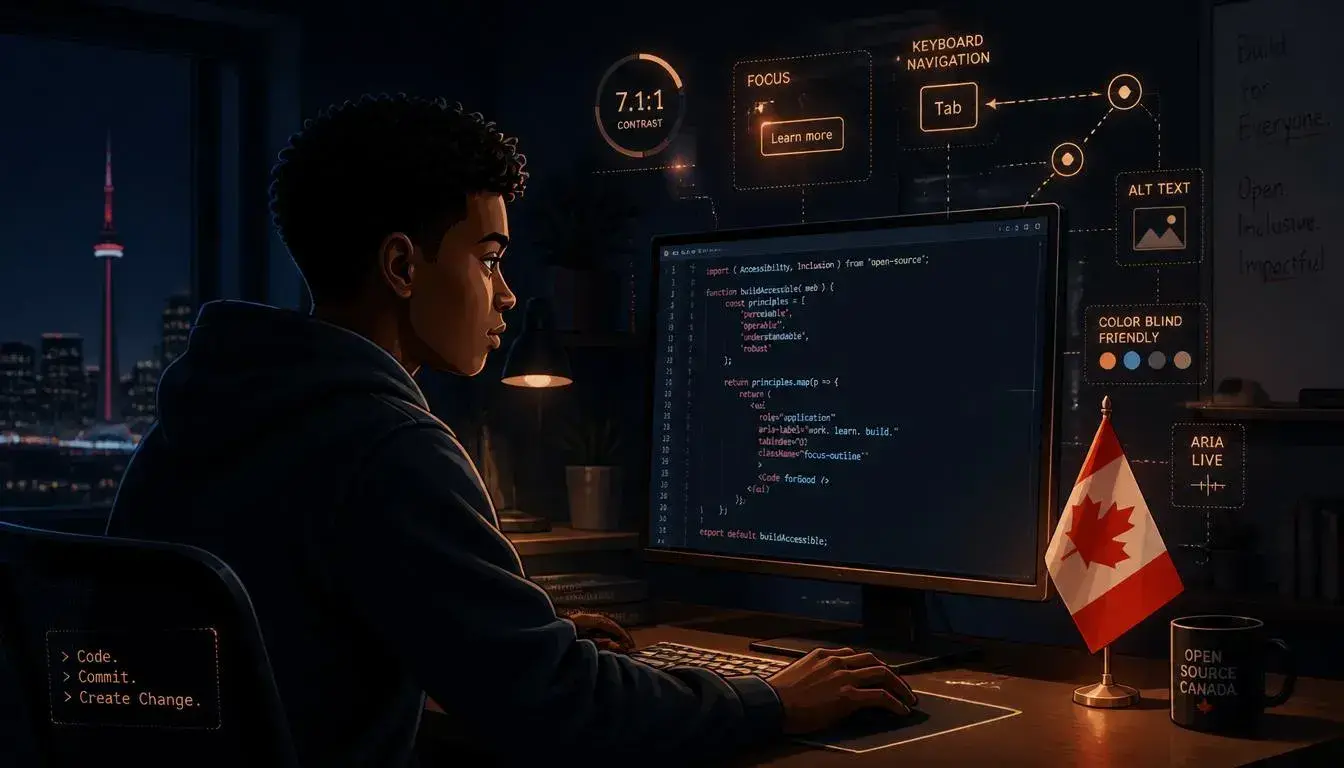
We've been contacted by more developers than we can count. Graduates, career-changers, aspiring builders — Canadians lead the list. Most of them arrive with genuine energy and real intent, and then quietly disappear. No follow-up. No product. Just a conversation that went nowhere and a slot in the schedule that could have gone to someone who meant it.
Then Samuel reached out.
The Most Committed Developer We've Mentored Hasn't Left High School Yet
He wasn't looking for a job. He wasn't asking us to hire him. He came looking for mentorship, the same ask we get from a lot of people. The difference is what happened next.
We started where we always start with Codrlabs Open: explaining what we do, how we approach product decisions, what the common blind spots are, and the things most developers wish they'd understood earlier. What we didn't expect was for Samuel to come back to every session with everything we'd covered already worked through on his own time — new questions, formed ideas, actual momentum.
He's 16. He's in high school. Every day brings a completely different subject, a different set of demands. And somewhere in between all of that, he was building.
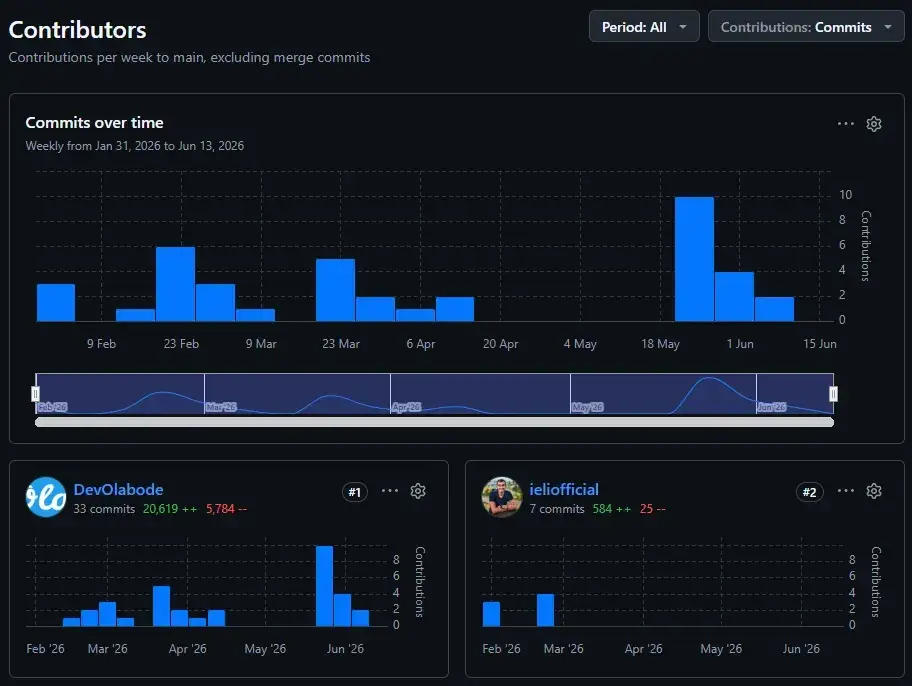
That's rarer than people admit. We've been ghosted by computer science graduates. Dropped by people who showed real interest and vanished the moment the actual work started. We almost never had to push Samuel for anything. He pushed us.
The Problem Everyone Skips
When accessibility came up in conversation, something clicked.
Here's what typically happens with accessibility in a development project: nothing. Or worse than nothing — it gets added to the list of things that would be nice, then quietly dropped when the deadline gets real. Backend developers are focused on functionality and speed; they're not wrong to be, but they're not looking at this either. Frontend developers are thinking about aesthetics and brand consistency. If you're lucky, a project lead has it somewhere on their mental checklist. If you're not — and you usually aren't — it simply doesn't happen.
The reasons aren't hard to understand, even if they're hard to accept.
Good accessibility tooling is expensive. The plans that actually do something sit behind a paywall most small teams and independent developers never seriously evaluate, because they hit the pricing wall before they understand what they're missing. The free options are either too narrow to be genuinely useful or technically complex enough to create more friction than they solve. There's no fully open-source, properly competitive product in this space. Nothing that says: here, use this, it's free, it works, it keeps up. The gap is obvious once you look at it directly. Most people just never look.
We voted. Accessibility it would be.
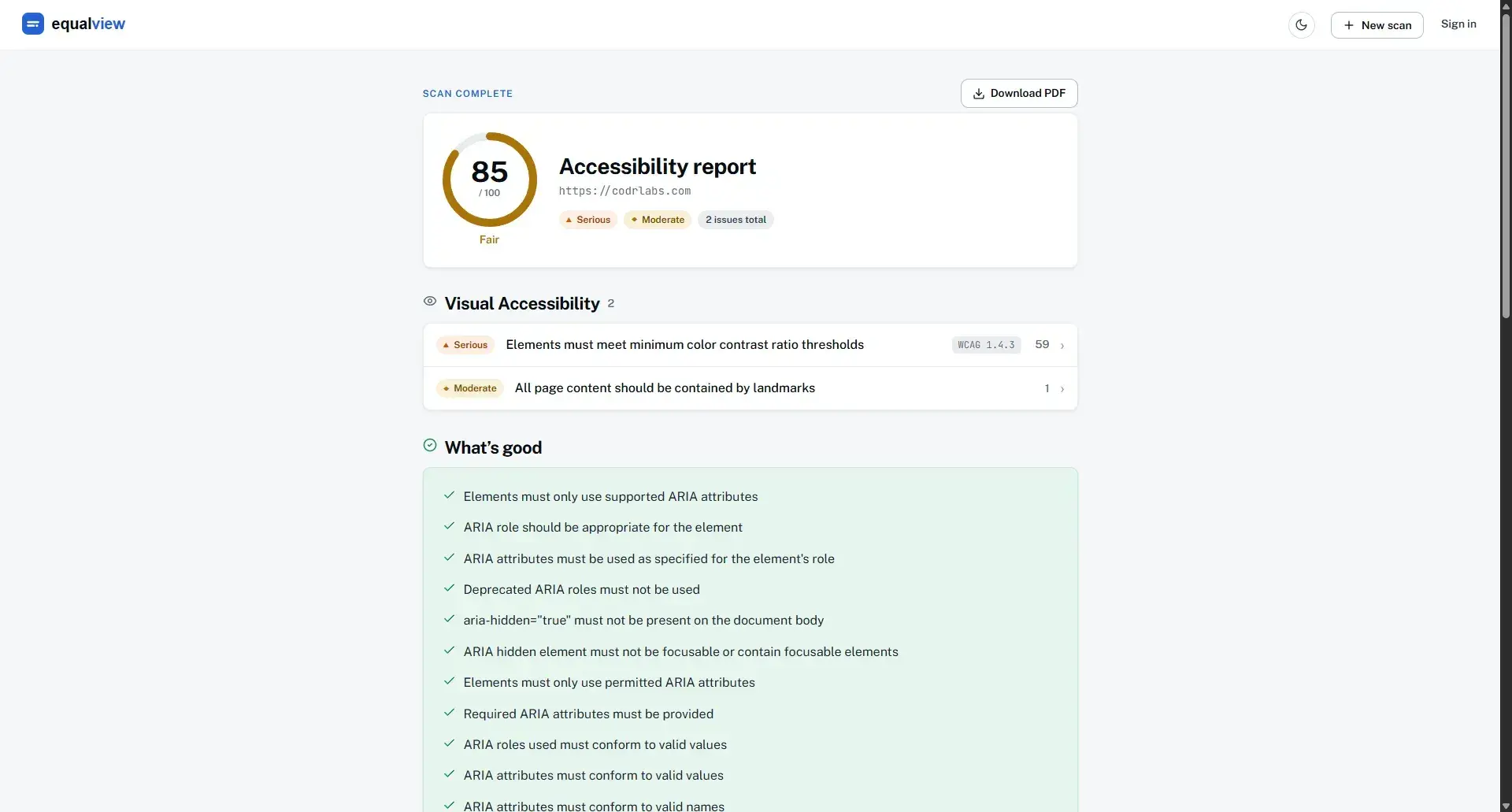
Samuel came back to the next session with brainstorming he'd done entirely on his own time. Names, feature sets, scope — the whole thing mapped out while he was supposed to be studying. That's how Vizably was born.
What Vizably Is
Vizably is a free and open-source accessibility tool built for developers, designers, and teams who want to build things that work for everyone — not just the users who happen not to have disabilities.
The codebase is public. The intent is straightforward: build something that competes with the paywall products that most developers and small businesses never get to properly evaluate, and give it away completely.
If you're a developer: the repository is at github.com/codrlabs/vizably. Explore it. Break it. Improve it. That's how this works.
If you're a user: we're soon adding a Ko-fi so you can support Samuel directly. Every cent goes back into the project — new features, bug fixes, AI tooling costs that go into building faster. No margin taken out, no redirect to anything else. You name what you want fixed. We build it.
What Codrlabs Open Actually Is
Not an internship. Not employment. Let's be clear about that.
What we do is walk you through the exact same process we'd run on our own product. Every decision gets explained — why this architecture, why this approach, why that shortcut will cost you later. Every blind spot gets named. Every "why do we do it this way" gets a real answer, not a non-answer dressed up as one.
The product you build is yours. A hundred percent. Under the terms agreed on from the beginning. Your branding. Your story. Your call on open-source or not — although we'll always recommend open-source, and here's why that's not a casual opinion.
I started on Nasqueron — it was called espace-win back then — when I was 12 or 13. I'm 34 now and still a member. Open source gave me access to the full depth of how things work, at every level, high and low, in a way proprietary environments simply don't. In a closed product, the technology is valued but knowledge transfer is slow, controlled, political. In open source, you learn in the open. You get corrected in the open. You build relationships that last decades, not quarters.
That compounds. It doesn't look like much at first. Then one day you look back at twenty years of it and understand what the foundation actually cost — which is time, consistency, and showing up.
To the Graduates Who Disappeared
We've held this one back long enough.
If you reached out to us, had a real conversation, showed genuine interest in building something — and then went quiet — this isn't a callout designed to embarrass you. You know who you are. But the point needs to be made clearly: a conversation is not a commitment. Showing interest is not the work.
Samuel is 16 and still in high school, and he made us look again at what follow-through actually means. That's either inspiring or uncomfortable, depending on where you're sitting right now. Either way it's accurate.
The results we're talking about — a real product, real ownership, a codebase other developers can use and build on — don't come from energy. They come from discipline. Consistency. Communication. Humility. Passion sustained past the point where it stops feeling exciting. That's grit, and it compounds with time, and the payoff when it lands is enormous.
We hope you get there. We genuinely do. But we're not waiting.
The Short Version
A 16-year-old Canadian reached out for mentorship and built something the industry has been ignoring. Codrlabs Open exists to give people like him the same process we'd apply to our own product — no bullshit, no hidden terms, full ownership at the finish line.
Vizably is the product. It's free. It's open. It's going to get better.